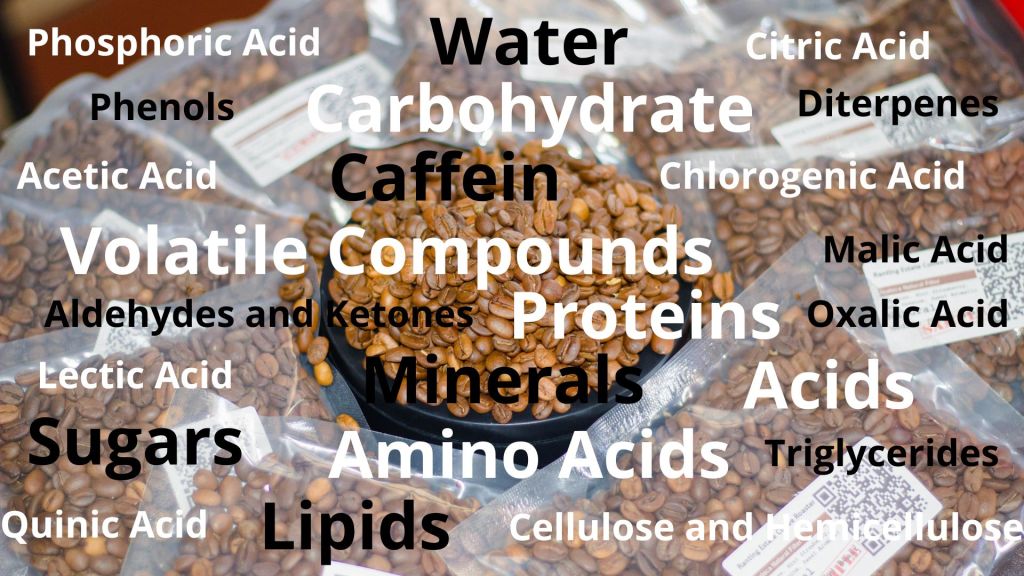
The Chemical Composition of Coffee and Its Percentages
Coffee is a complex beverage containing hundreds of chemical compounds that contribute to its taste, aroma, and health benefits. Understanding the chemical composition of coffee not only enriches our appreciation for this beloved drink but also helps in analyzing its impact on health and brewing quality. Below is a detailed breakdown of the major chemical components found in coffee:
1. Water-Soluble Compounds (30-40%)
Water-soluble compounds dissolve easily during brewing and contribute significantly to coffee’s flavor profile.
- Caffeine (1-2%)
Caffeine is the primary stimulant in coffee, responsible for its energizing effects. The content varies depending on the coffee species, with Robusta containing more caffeine (~2.2%) than Arabica (~1.2%). - Chlorogenic Acids (3-7%)
These are the primary antioxidants in coffee, contributing to its bitterness and acidity. Chlorogenic acids also play a role in coffee’s health benefits, such as reducing inflammation and boosting metabolism. - Sugars (5-10%)
Arabica coffee beans are higher in sugar content compared to Robusta. These sugars caramelize during roasting, adding sweetness and complexity to the flavor.
Major Types of Acids in Coffee
| Acid | Function in Coffee | Arabica Content | Robusta Content |
|---|---|---|---|
| Chlorogenic Acid | Contributes to bitterness and antioxidant properties. | 5.5 – 7% | 7 – 10% |
| Quinic Acid | Adds astringency, increases with roasting. | Moderate | Higher |
| Citric Acid | Provides bright, fruity, and citrusy notes. | High | Low |
| Malic Acid | Gives tartness, often compared to green apples. | High | Very Low |
| Lactic Acid | Contributes to a creamy texture and smoothness. | Moderate | Low |
| Acetic Acid | Adds a mild vinegar-like tang, excessive amounts can cause sourness. | Moderate | High |
| Phosphoric Acid | Produces a sparkling, clean acidity with a fruity edge. | High (notably in specialty coffee) | Low |
| Oxalic Acid | Contributes to sharpness; high amounts can cause unpleasant flavors. | Low | Moderate |
2. Lipids (10-15%)
Lipids, or oils, are predominantly found in the coffee bean’s outer layer. They play a key role in the crema formation during espresso brewing and contribute to the body of the coffee.
- Triglycerides (75% of lipids)
These are the most abundant lipids in coffee, giving the drink its smooth texture. - Diterpenes (0.2-0.4%)
Compounds like cafestol and kahweol are diterpenes that may have cholesterol-raising effects when consumed unfiltered, as in French press coffee.
3. Proteins and Amino Acids (10-13%)
Proteins and amino acids are essential for Maillard reactions during roasting, which create many of the aromatic compounds in coffee.
4. Carbohydrates (30-40%)
Carbohydrates, primarily polysaccharides, are a significant portion of coffee beans.
- Cellulose and Hemicellulose
These compounds form the structure of the coffee bean and break down during roasting to release aromatic compounds.
5. Minerals (3-5%)
Coffee contains various essential minerals, including potassium, magnesium, and calcium. These minerals influence the extraction process and the overall flavor profile.
6. Volatile Compounds (1-2%)
During roasting, coffee develops over 800 volatile aromatic compounds, responsible for its distinctive aroma.
- Aldehydes and Ketones
These compounds contribute to the fruity and nutty aromas. - Phenols
Phenols add smoky and spicy notes to the coffee.
7. Water (10-12%)
Green coffee beans contain 10-12% water, which decreases significantly during roasting.
Summary of Key Components in Coffee Beans
| Component | Percentage | Function |
|---|---|---|
| Water-soluble compounds | 30-40% | Flavor, aroma, and health benefits |
| Lipids | 10-15% | Texture and body |
| Proteins and Amino Acids | 10-13% | Aroma development during roasting |
| Carbohydrates | 30-40% | Structure and flavor during brewing |
| Minerals | 3-5% | Flavor and extraction balance |
| Volatile Compounds | 1-2% | Aroma |
| Water | 10-12% | Bean integrity and processing |
Understanding the chemical composition of coffee not only enhances the brewing experience but also helps consumers make informed choices about their coffee preferences and health impacts. Whether it’s the caffeine kick, antioxidant benefits, or the rich aroma, coffee’s complex chemistry is what makes it an extraordinary beverage.
Comparison of Chemical Composition Between Arabica and Robusta
Arabica and Robusta are the two most widely cultivated coffee species, each with distinct chemical characteristics. Below is a comparison of the major chemical components and their percentages in Arabica and Robusta coffee beans:
| Component | Arabica (%) | Robusta (%) | Notes |
|---|---|---|---|
| Caffeine | 1.2 – 1.5% | 2.0 – 2.7% | Robusta contains nearly twice as much caffeine as Arabica. |
| Chlorogenic Acids | 5.5 – 7% | 7 – 10% | Robusta has higher chlorogenic acid content, contributing to its bitterness. |
| Sugars (Soluble Carbohydrates) | 6 – 9% | 3 – 7% | Arabica has more sugar, resulting in a sweeter and more complex flavor. |
| Lipids | 13 – 15% | 10 – 12% | Arabica has higher lipid content, contributing to a smoother and creamier texture. |
| Protein | 10 – 12% | 9 – 11% | Both have similar protein content, though Arabica is slightly higher. |
| Minerals | 3 – 5% | 3 – 5% | Mineral content is relatively similar in both species. |
| Water (Green Beans) | 10 – 12% | 10 – 12% | Moisture levels in green beans are comparable between Arabica and Robusta. |
| Volatile Compounds | 1.0 – 1.5% | 0.8 – 1.2% | Arabica has more volatile compounds, resulting in a more complex aroma. |
Key Differences
- Caffeine:
- Robusta contains nearly double the caffeine compared to Arabica, making it stronger in bitterness and stimulant effects.
- Chlorogenic Acids:
- Higher levels in Robusta contribute to its sharper bitterness and astringent properties.
- Sugars:
- Arabica has more sugar content, giving it a naturally sweeter and more refined taste compared to Robusta.
- Lipids and Texture:
- The higher lipid content in Arabica creates a smoother and creamier texture, while Robusta tends to have a rougher mouthfeel.
- Aroma and Complexity:
- With more volatile compounds, Arabica delivers a richer, more complex aroma than Robusta.
Choose Based on Preferences
- For a coffee with stronger bitterness, higher caffeine, and a more intense kick: Robusta.
- For a coffee with sweeter flavors, complex aroma, and smoother texture: Arabica.
 Ranting Estate Lestari
Tinggalkan komentar